
Ready in: 35 minutes · Serves: 2 · Technique: Sautéing · Storage: Refrigerate for up to 3 days.
Quick Answer
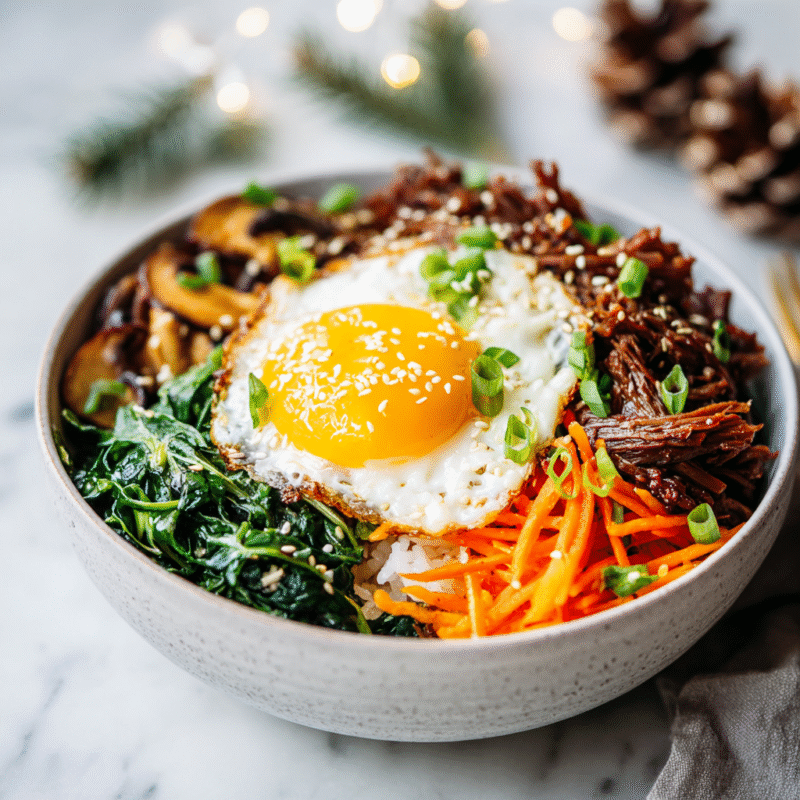
This quick Korean Bibimbap is a colorful and satisfying rice bowl topped with marinated beef, sautéed vegetables, and a fried egg, making it perfect for cozy meals or holiday gatherings.
As the leaves turn and the air grows crisp here in New York City, I can't help but dream of cozy meals that warm the soul-a perfect prelude to upcoming gatherings like Thanksgiving and Christmas. One such dish that never fails to satisfy my cravings is Korean Bibimbap. This vibrant rice bowl, filled with colorful vegetables, tender beef, and a luscious fried egg, is a symphony of flavors and textures in every bite. This easy-to-make version is perfect for weeknight dinners yet fancy enough to impress a holiday gathering!
A Cozy Holiday Treat

Why You'll Love This Recipe
- Vibrant and colorful dish that is visually appealing and appetizing.
- Quick to prepare, making it perfect for weeknight dinners.
- Highly adaptable with various vegetables and proteins, catering to personal preferences.
- Rich in flavors, combining savory marinated beef with fresh veggies and a runny egg.
- A comforting meal that brings warmth to your home, perfect for gatherings.
Ingredients
To create this delightful bibimbap, you'll need the following ingredients:
Rice
- 2 cups cooked jasmine rice (or your rice of choice)
Beef & Marinade
- 8 ounces of beef (bulgogi or sirloin), thinly sliced
- 2 tablespoons soy sauce
- 1 tablespoon gochujang (Korean chili paste)
- 1 tablespoon sesame oil
- 2 teaspoons sugar
Vegetables
- 1 tablespoon vegetable oil
- 2 cups fresh spinach, blanched
- 1 cup shredded carrots
- 1 cup sliced shiitake mushrooms
Egg & Garnish
- 2 eggs
- Sesame seeds and green onions, for garnish
How to Make Korean Bibimbap (Step-by-Step)
This recipe will guide you through the simple steps to create a delicious Korean Bibimbap.
Step 1: Marinate the Beef
Begin by combining the soy sauce, gochujang, sesame oil, and sugar in a mixing bowl. Add the sliced beef and toss to coat. Allow it to marinate for about 15 minutes as the flavors meld together and create a fragrant marinade.
Step 2: Cook the Vegetables
In a large skillet over medium heat, warm a sprinkle of vegetable oil. Sauté the mushrooms until they soften and release their earthy aroma, about 4-5 minutes. Add the shredded carrots next, cooking until they are slightly tender but still have a bit of crunch. Finally, toss in the blanched spinach and sauté until just warmed through.
Step 3: Prepare the Beef
In the same skillet, push the veggies to the side and add the marinated beef. Cook until the beef is nicely browned and cooked through, taking care not to overcook it, which can leave it chewy. The sizzle of the beef hitting the hot skillet is music to my ears!
Step 4: Fry the Eggs
As the beef finishes cooking, in a separate non-stick skillet, fry the eggs sunny-side up until the whites are set but the yolks are still runny. This is the pièce de résistance of bibimbap!
Step 5: Assemble the Bowls
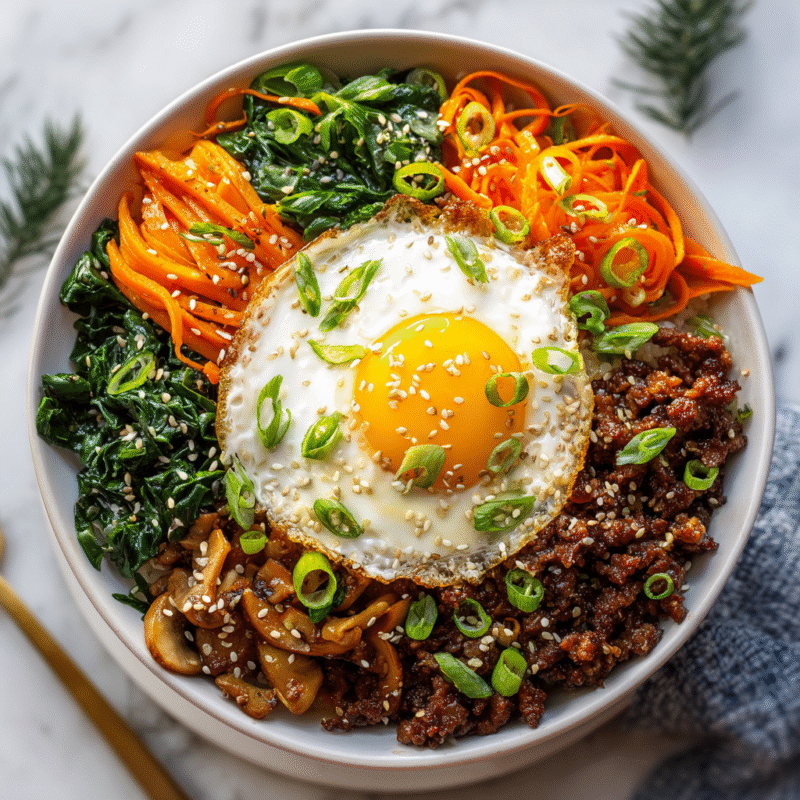
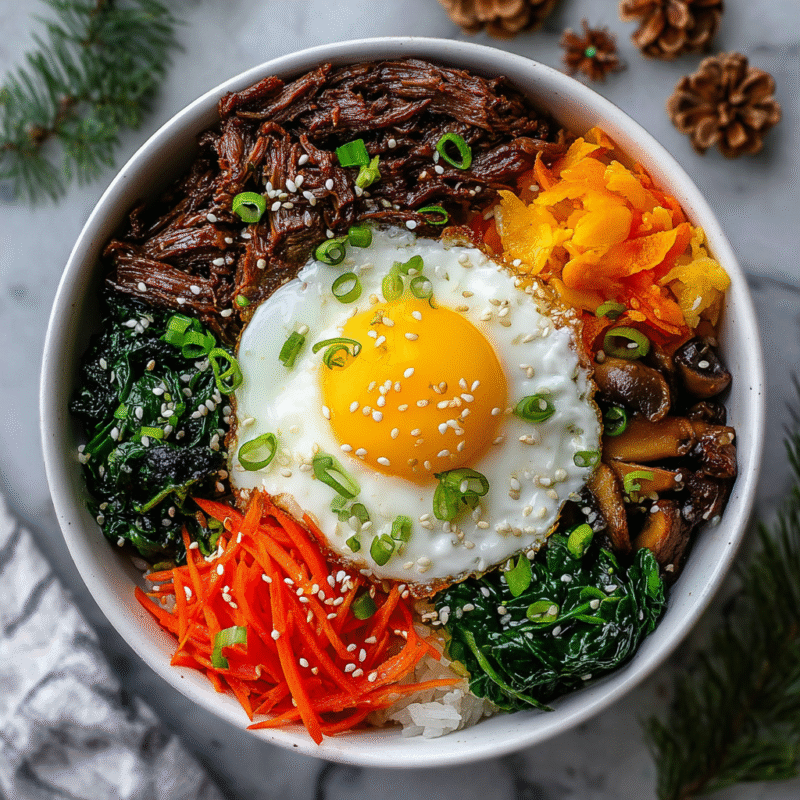
To serve, divide the cooked rice evenly into two bowls. Artistically arrange the sautéed vegetables and beef on top of the rice. Crown it all with the fried egg, letting that golden yolk of the egg become the heart of your bibimbap. A sprinkle of sesame seeds and chopped green onion on top adds that final lovely touch.
Step 6: Serve and Enjoy
Finally, drizzle with a touch of sesame oil and additional gochujang if you love an extra kick. Mix everything together before diving in; the combination of flavors and textures will come alive with each spoonful!
Common Mistakes to Avoid
- Neglecting the marinate time: Skipping the marination process will result in a less flavorful beef. Don't rush it!
- Overcrowding the pan: Cooking all your ingredients at once can lead to steaming instead of sautéing. Cook in batches to get that caramelization!
- Using cold rice: Make sure your rice is warm to help bring everything together. Cold rice can lead to a lackluster experience.
Tips and Tricks for Success
- Feel free to mix and match vegetables based on your preference or what's in season! Zucchini, bell peppers, or even roasted sweet potatoes would be fantastic additions.
- For a vegetarian version, swap out the beef for tofu or tempeh, marinating them in the same sauce.
- A dash of lime juice right before serving can add a beautiful zesty brightness!
Variations
- Substitute jasmine rice with quinoa or brown rice for a different texture.
- Use different proteins like chicken, shrimp, or tempeh for variety.
- Add or replace vegetables with kale, bell peppers, or bean sprouts.
- Try different sauces such as teriyaki or a peanut sauce for an alternative flavor.
How to Serve
- Serve the bibimbap in individual bowls for a personal touch.
- Top with a sprinkle of sesame seeds and chopped green onions for garnish.
- Offer additional gochujang on the side for those who enjoy extra spiciness.
- Pair with a light salad or pickled vegetables for a complete meal.
Make Ahead and Storage
- Make Ahead: Marinate the beef up to 24 hours in advance for deeper flavor.
- Storage: Leftovers can be stored in an airtight container in the refrigerator for up to 3 days.
- Reheating: Warm the rice and toppings in the microwave; fry a fresh egg to top it off for best results.
- Freezing: It's not recommended to freeze the cooked bibimbap as the texture may change, especially for the vegetables.
Recipe Notes / What I Learned
Creating bibimbap in my cozy kitchen not only filled my home with enticing aromas but also reminded me of how versatile cooking can be. Each time I make it, I experiment with different ingredients, making it a dish that feels delightful and unique every time!
Yield and Serving Size
Yield: 2 · Serving Size: 1 bowl
Nutrition Snapshot
Estimated Nutrition Per Serving: ~600 calories · 30g protein · 70g carbs · 20g fat

Recipe by:
Quick Korean Bibimbap
Ingredients
Equipment
Method
- Combine the soy sauce, gochujang, sesame oil, and sugar in a mixing bowl. Add the sliced beef and toss to coat. Marinate for about 15 minutes.
- In a large skillet over medium heat, warm vegetable oil. Sauté the mushrooms until they soften, about 4-5 minutes. Add the shredded carrots, cooking until slightly tender, then toss in the blanched spinach until warmed through.
- In the same skillet, push the veggies aside and add the marinated beef. Cook until browned and cooked through.
- In a separate non-stick skillet, fry the eggs sunny-side up until the whites are set but the yolks are still runny.
- To serve, divide the rice into bowls, arrange the sautéed vegetables and beef on top, and crown with the fried egg. Garnish with sesame seeds and green onions.
- Drizzle with sesame oil and additional gochujang if desired. Mix everything together before enjoying.
Notes
FAQs
1. Can I make bibimbap vegetarian?
Yes, you can easily make bibimbap vegetarian by swapping out the beef for tofu or tempeh. Marinate the tofu or tempeh in the same sauce for a delicious alternative.
2. What vegetables can I use in bibimbap?
Feel free to mix and match vegetables based on your preference or what's in season! Zucchini, bell peppers, or roasted sweet potatoes make fantastic additions.
3. How do I store leftovers of bibimbap?
If you have leftovers, they can be stored in an airtight container in the refrigerator for up to 3 days. It's best to keep the fried egg separate until you're ready to reheat.